
The Complete Guide to Middle Management:
What Middle Managers Do Why They Matter
How to Develop Them
By
Sally Foley-Lewis MBA, FILP, CPS
Middle managers are the engine room of organisational performance.
Mid-level leaders translate strategy into action. They connect senior leaders with frontline teams. They turn decisions into momentum. They protect culture when pressure rises. They coach, communicate, delegate, decide, influence and absorb complexity from every direction.
Yet middle managers remain one of the most misunderstood and underdeveloped leadership groups in many organisations.
This guide explains what middle managers do, why they matter, what makes the role uniquely complex, and how organisations can develop high-performing middle managers who influence up, collaborate across and inspire down.
What is a Middle Manager?
A middle manager is a leader who sits between senior leadership and frontline employees.
Their role is to translate organisational strategy into practical action while also representing the realities, risks and insights of the frontline back to senior decision-makers.
Middle managers may lead people directly, manage other managers, oversee projects, run departments or coordinate work across functions. Their titles vary widely, including:
Team Leader
Operations Manager
Department Manager
Branch Manager
Regional Manager
Project Manager
Program Manager
Service Delivery Manager
Practice Manager
Clinical Manager
School Leader
Centre Manager
Business Unit Manager
What defines a middle manager is not the job title. It is the position they hold in the organisation: between strategic intent and operational delivery.
Middle managers are the translators, connectors and multipliers inside organisations.
They are expected to understand the strategy, communicate it clearly, manage resistance, keep teams engaged, deliver results, solve problems, navigate ambiguity, develop people and influence stakeholders who may not report to them.
That is not a small job. It is a strategic job.
Why Middle Managers Matter?
Middle managers matter because they determine whether organisational strategy works in practice.
A senior leadership team may create the strategy, but middle managers make it real. They decide how priorities are communicated, how work is sequenced, how people are supported, how conflict is handled and how change lands with employees.
When middle managers are effective:
Strategy becomes action
Teams understand what matters
Employees feel supported and accountable
Communication flows up, down and across the organisation
Change is implemented with less resistance
Problems are identified earlier
Performance conversations happen sooner
Talent is developed
Culture becomes visible through everyday behaviour
When middle managers are ineffective or unsupported:
Strategy stalls
Priorities become confused
Employees disengage
Rework increases
Senior leaders lose touch with operational reality
Team members experience inconsistent leadership
High performers become frustrated
Underperformance is tolerated
Change fatigue grows
Middle managers are not merely a layer of management. They are the layer where organisational intent is tested. If the middle is weak, the organisation wobbles.
The Evidence: Why Organisations Need Better Middle Management
Research consistently shows the importance of managers and middle managers.
Gallup has reported that managers account for 70 percent of the variance in team engagement. That means the manager has a major influence on whether people feel connected, committed and productive at work.
McKinsey has also argued that middle managers are a critical organisational resource. Its research has linked strong middle manager behaviours with stronger organisational performance and has described middle managers as essential to connecting organisational vision with execution.
The World Economic Forum’s Future of Jobs Report 2025 found that 39 percent of workers’ key skills are expected to change by 2030. This reinforces the need for managers who can coach, adapt, communicate, build trust and help teams learn continuously.
The conclusion is clear: organisations cannot future-proof performance without developing the people who sit closest to execution.
That means developing middle managers.
The Middle Manager Paradox
Middle managers operate inside a constant paradox.
🕸️ They are responsible for performance, but they may not control the strategy.
🕸️ They are accountable for team engagement, but they may not control workload, systems or resourcing.
🕸️ They are expected to communicate decisions, even when they were not involved in making them.
🕸️ They must support their teams while also representing senior leadership expectations.
🕸️ They are asked to be strategic and operational, human and commercial, supportive and accountable, calm and urgent, loyal and honest.
That is the middle manager paradox: high responsibility, limited authority and constant expectation. This is why middle management is not simply a step on the way to senior leadership. It is a complex leadership discipline in its own right.
Research Project: Complete the Survey
Influence Without Authority, Role Ambiguity and Identify Conflict in Middle Managers
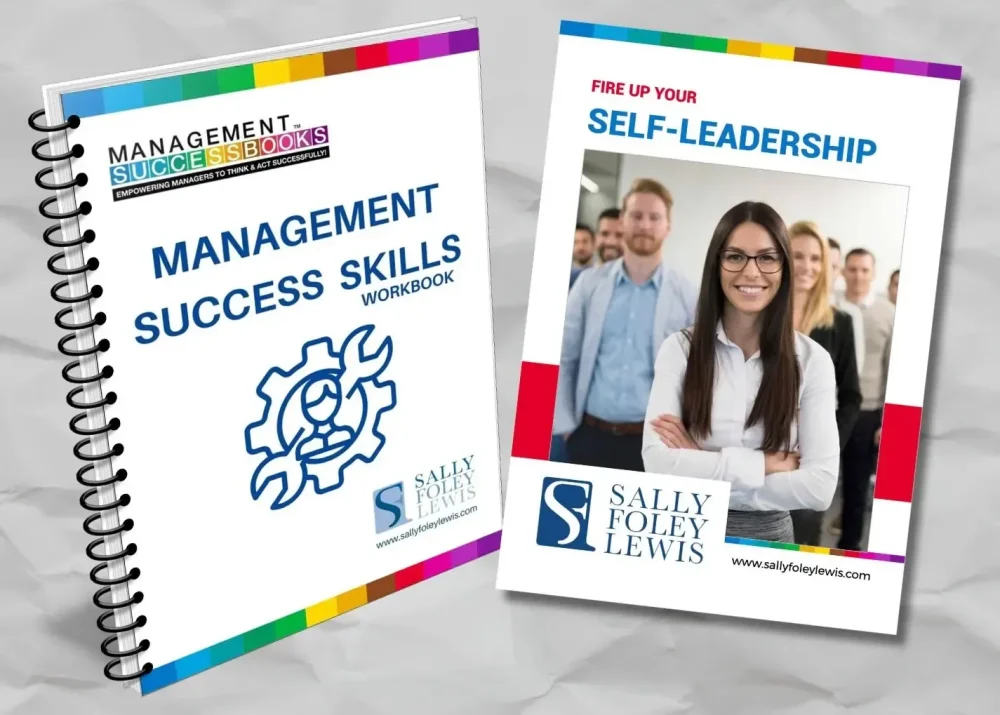
Your gift for taking the survey: Management Success Skills eWorkbook
&
Self-Leadership Witepaper

The Evolution of Middle Management
The traditional view of middle management was built around supervision, reporting and control. That view is outdated. Modern middle managers are no longer just task supervisors. They are:
Sense-makers
Coaches
Translators
Culture carriers
Decision-makers
Problem-solvers
Change leaders
Talent developers
Relationship builders
Strategic connectors
The role has evolved because work has evolved.
Today’s middle managers lead hybrid teams, navigate AI adoption, manage increased ambiguity, respond to constant change, work across silos and support employees with higher expectations of flexibility, purpose and development.
The middle manager of the future will not be valued for passing information up and down the hierarchy. They will be valued for creating clarity, capability and momentum.
The Biggest Challenges Facing Middle Managers
Middle managers often face pressure from every direction. Some of the most common challenges include:

1. Competing Priorities
📌 Senior leaders want delivery.
📌 Teams need support.
📌 Customers need service.
📌 Peers need collaboration.
📌 Systems need compliance.
📌 Everything feels urgent.
The middle manager must constantly decide what matters most.

2. Role Ambiguity
Many middle managers are promoted because they were strong technical performers, but they are not always given clear expectations for leadership. They may ask themselves:
❓ Am I here to do the work or lead the work?
❓ Am I meant to protect my team or push them harder?
❓ Am I allowed to challenge senior leaders?
❓ How strategic should I be?
❓ What decisions can I actually make?
When role clarity is missing, confidence suffers.

3. Limited Authority
Middle managers are often accountable for outcomes they cannot fully control. They may need cooperation from peers, decisions from senior leaders, support from other departments or resources from outside their team. This makes influence one of the most important middle management skills.

4. Communication Overload
Middle managers receive information from above, below and across the organisation.
They must filter, translate and prioritise that information so their teams do not drown in noise.
Communication is not simply sending messages. It is creating meaning.

5. Change Fatigue
Middle managers are often the people responsible for implementing change they did not design. They must manage their own reaction while helping others work through uncertainty, resistance and frustration.
This requires emotional intelligence, resilience and practical communication.

6. Underdeveloped Leadership Capability
Many organisations promote people into middle management without enough leadership development. The result is predictable. New managers rely on technical expertise, overwork, control or good intentions.
Good intentions are lovely. They are not a leadership strategy.

7. Burnout
Middle managers are frequently squeezed between executive expectations and team realities. They absorb pressure, solve problems, manage emotions and keep work moving.
Without boundaries and support, the role becomes exhausting.
What Great Middle Managers Do Differently
Great middle managers do not simply work harder.
🏆 They lead differently.
🏆 They create clarity when priorities compete.
🏆 They communicate context, not just instructions.
🏆 They delegate outcomes, not just tasks.
🏆 They coach people to think, not simply comply.
🏆 They build trust through consistency.
🏆 They make decisions with values and evidence.
🏆 They manage up with courage and respect.
🏆 They collaborate across silos.
🏆 They develop others instead of becoming indispensable.
They understand that their job is not to be the hero. Their job is to multiply the capability of the people around them. This is why great middle managers are not bottlenecks.
They are multipliers.

If you're a middle manager, join free middle manager community:
The Middle Multipliers
The 5 Key Ingredients of High-Performing Middle Managers
High-performing middle managers need more than generic leadership tips. They need a practical framework that helps them lead themselves, lead their teams and lead through complexity. The Five Key Ingredients of High-Performing Middle Managers are:
🥩 Protein: Values
🧀 Cheese: Self-Awareness
🍅 Tomato: Communication
🥒 Pickles: Problem Solving and Decision Making
🥬 Lettuce: Leadership Brand and Legacy
🫙 Secret Sauce: Leaders Are Lifters
...
🥯 The Buns: Leading Up and Leading Down
🍔 Yes, it is a burger. Because leadership is serious work, but that does not mean the learning has to be beige.
🥩 1. PROTEIN: Values
Protein represents values because values are the foundation of leadership strength.
A middle manager’s values shape how they make decisions, communicate expectations, respond under pressure and build trust.
Values are not posters on a wall. They are choices in motion. A middle manager with clear values can answer:
🥓 What do I stand for?
🥚 What behaviours will I encourage?
🍗 What behaviours will I not ignore?
🍖 How do I make decisions when there is no perfect option?
🍳 How do I align my team’s work with the organisation’s purpose?
Values help middle managers move from reactive leadership to intentional leadership. Without clear values, managers become inconsistent. They may avoid hard conversations, shift standards depending on pressure, or make decisions based only on urgency.
With clear values, managers create stability. They can say:
“Here is what matters. Here is why it matters. Here is how we will work together.”
That clarity builds trust.

🧀 2. CHEESE: Self-Awareness
Cheese represents self-awareness because great leadership starts with exceptional self-leadership. Middle managers are constantly watched. Their tone, timing, decisions, body language, reactions and silence all send messages. Self-awareness helps managers understand their impact. A self-aware middle manager asks:
🧀 How do I show up under pressure?
🧀 What triggers me?
🧀 What assumptions am I making?
🧀 How do others experience my leadership?
🧀 Where do I need to regulate my response?
🧀 What feedback am I avoiding?
Self-awareness is not soft. It is operationally useful. A manager who lacks self-awareness may unintentionally create confusion, fear, dependence or frustration. A manager with strong self-awareness can pause, reflect, adjust and respond with greater intention.
They are less likely to react defensively, over-control work, avoid conflict or mistake busyness for effectiveness.
Self-awareness creates leadership maturity.
Check out the SPARK: Self-Leadership Interview Series HERE
🍅 3. TOMATO: Communication
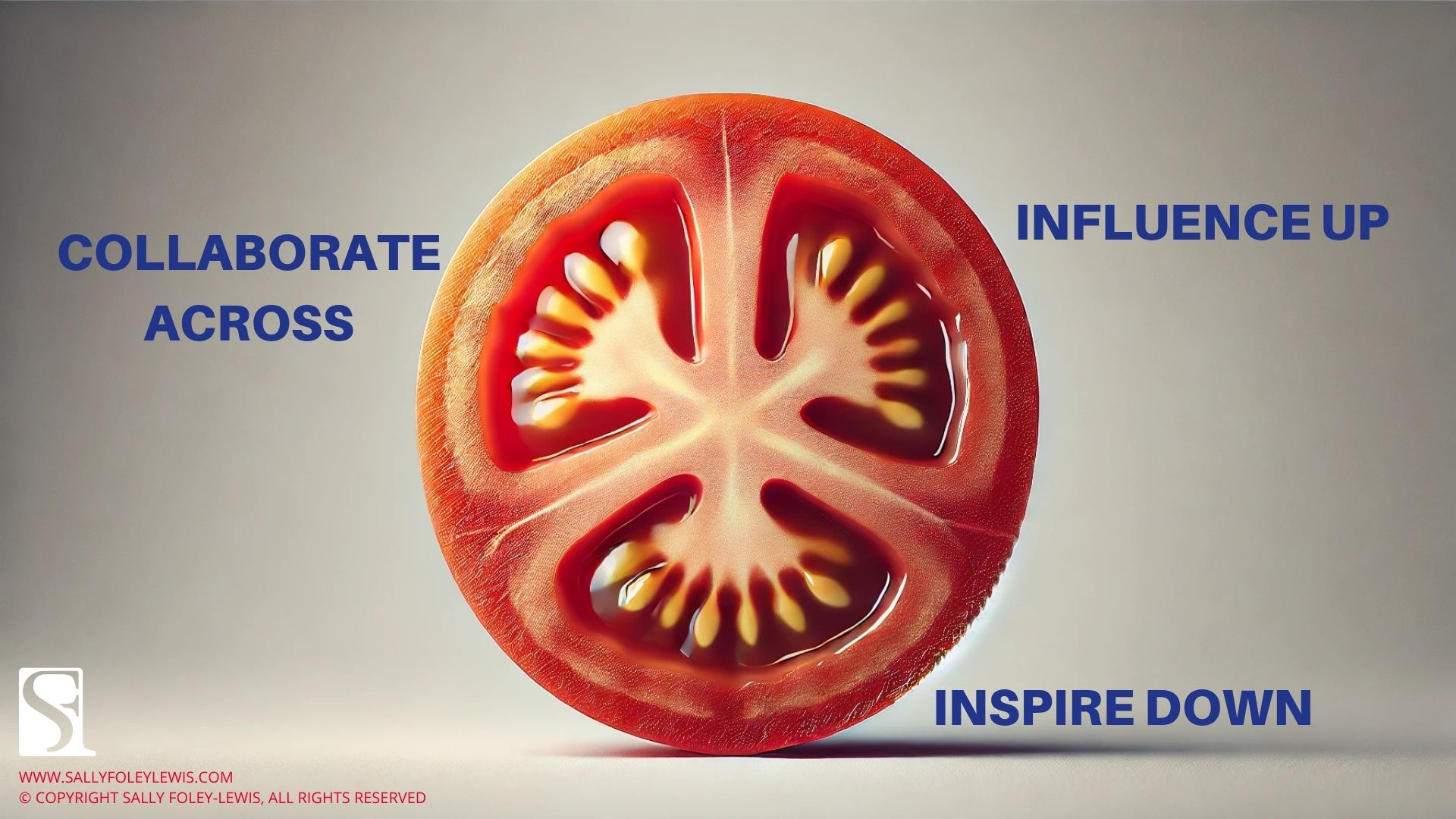
Tomato represents communication because communication holds the whole burger together. Middle managers communicate in three directions:
⬇️ Inspire down
↔️ Collaborate across
⬆️ Influence up
Each direction requires a different skill set.
🍅 Inspire Down
Inspiring down means helping team members understand priorities, expectations, purpose and progress. It includes:
⬇️ Setting clear expectations
⬇️ Giving feedback
⬇️ Holding one-on-one conversations
⬇️ Recognising effort
⬇️ Explaining decisions
⬇️ Creating psychological safety
⬇️ Building accountability
The goal is not motivational fluff. The goal is useful clarity.
🍅 Collaborate Across
Collaborating across means working effectively with peers, other departments and stakeholders. It includes:
↔️ Managing competing priorities
↔️ Negotiating resources
↔️ Resolving conflict
↔️ Breaking silos
↔️ Sharing information
↔️ Building cross-functional trust
Middle managers rarely succeed alone. Their work depends on lateral influence.
🍅 Influence Up
Influencing up means communicating with senior leaders in a way that is credible, concise and commercially useful. It includes:
⬆️ Providing recommendations, not just problems
⬆️ Escalating risks early
⬆️ Challenging respectfully
⬆️ Connecting operational reality to strategic priorities
⬆️ Asking better questions
⬆️ Managing expectations
Influencing up is not complaining upward. It is helping senior leaders make better decisions.
🥒 4. PICKLES: Problem Solving & Decision Making
Pickles represent problem solving and decision making because the middle manager’s role is full of tangy complexity. Middle managers are often where problems first become visible. They see process breakdowns, customer pain points, team friction, resource gaps, skill issues and change resistance before senior leaders do.
High-performing middle managers do not simply react to problems. They diagnose them. They ask:
❓ What is the actual problem?
❓ What evidence do we have?
❓ What assumptions are we making?
❓ Who is affected?
❓ What are the risks?
❓ What decision is needed?
❓ Who needs to be involved?
❓ What can we test before committing?
Good decision making requires clarity, courage and discipline. Poor decision making often shows up as:
🥒 Delayed decisions
🥒 Decisions based on the loudest voice
🥒 Decisions made without data
🥒 Decisions escalated unnecessarily
🥒 Decisions made too quickly to remove discomfort
🥒 Decisions no one owns
Great middle managers build decision confidence in themselves and their teams.
They do not make every decision for everyone. They teach people how to think.

Problem Solving: From Symptoms to Root Causes
Middle managers are often surrounded by symptoms. Examples include:
🥒 Missed deadlines
🥒 Low morale
🥒 Customer complaints
🥒 Rework
🥒 Conflict
🥒 Absenteeism
🥒 Poor communication
🥒 Escalations
🥒 Process delays
The danger is solving the symptom while leaving the cause untouched. A middle manager might see missed deadlines and assume the team needs to work harder. The real issue may be unclear priorities, poor workflow, lack of capability, unrealistic resourcing or decision delays from another department.
Better problem solving starts with better diagnosis. Useful questions include:
❓ What is happening?
❓ Where is it happening?
❓ When did it start?
❓ Who is affected?
❓ What has changed?
❓ What data do we have?
❓ What assumptions are we making?
❓ What is within our control?
❓ What needs escalation?
❓ What can we test?
Middle managers do not need to have every answer. They need to create a disciplined process for finding better answers.
🥬 5. LETTUCE: Leadership Brand & Legacy
Lettuce represents leadership brand and legacy because every middle manager is known for something. The question is whether that reputation is intentional. A leadership brand is the consistent impression a manager creates through behaviour.
It includes:
🥬 How they communicate
🥬 How they respond under pressure
🥬 How they treat people
🥬 How they make decisions
🥬 How they handle conflict
🥬 How they support development
🥬 How they represent their team
🥬 How they manage commitments
A middle manager’s leadership brand may be:
🥬 Calm and clear
🥬 Reactive and scattered
🥬 Strategic and practical
🥬 Avoidant and vague
🥬 Supportive and accountable
🥬 Controlling and overloaded
Legacy is what remains because of their leadership. A strong middle manager leaves behind better people, stronger systems, clearer standards and greater capability.
A weak middle manager leaves behind dependency, confusion and quiet frustration.
Leadership brand is what people experience now. Leadership legacy is what continues after the manager leaves the room.

🫙 SECRET SAUCE: Leaders Are Lifters
The secret sauce of high-performing middle managers is this: Leaders are lifters.
The best middle managers lift capability, confidence, ownership and performance in others.
‼️ They do not hoard knowledge. They share it.
‼️ They do not become indispensable. They build independence.
‼️ They do not rescue everyone. They coach people to solve.
‼️ They do not simply manage tasks. They develop people.
Lifting others includes:
🫙 Delegating meaningful work
🫙 Coaching team members
🫙 Giving useful feedback
🫙 Creating stretch opportunities
🫙 Sponsoring emerging talent
🫙 Recognising contribution
🫙 Building confidence
🫙 Encouraging ownership
🫙 Supporting career growth
🫙 Preparing others to lead
This is where middle managers become multipliers. A manager who lifts others increases the capability of the whole organisation.

🥯 TOP BUN: Managing Up
How Middle Managers Influence Senior Leaders
Managing up is one of the most important and misunderstood skills in middle management.
It does not mean flattering senior leaders, agreeing with everything or avoiding hard truths.
Managing up means helping senior leaders make better decisions by providing useful information, clear recommendations and grounded insight. Middle managers are closest to operational reality. They see what is working, what is not working and what is likely to break.
To influence up effectively, middle managers need to:
🥯 Understand senior leadership priorities
🥯 Communicate in concise, evidence-based ways
🥯 Bring options, not just problems
🥯 Escalate early rather than dramatically
🥯 Connect team issues to organisational outcomes
🥯 Challenge respectfully
🥯 Ask for clarity when priorities conflict
🥯 Avoid emotional dumping
🥯 Build credibility through follow-through
A useful managing-up phrase is:
“Here is the issue, here is the impact, here are two options and here is my recommendation.”
That sentence alone could save several meetings. Possibly a few souls.
🥯 BOTTOM BUN: Leading Down
Leading down means creating the conditions for team members to perform, learn and contribute. This includes:
🥯 Setting direction
🥯 Clarifying expectations
🥯 Building trust
🥯 Giving feedback
🥯 Coaching performance
🥯 Recognising progress
🥯 Managing conflict
🥯 Supporting development
🥯 Holding people accountable
Inspiring down is not about being endlessly positive. It is about helping people understand:
🥯 What matters
🥯 Why it matters
🥯 What good looks like
🥯 Where they have ownership
🥯 How their work contributes
🥯 What support is available
🥯 What standards must be met
Middle managers need to be both supportive and clear.
Support without standards creates drift.
Standards without support create fear.
Effective leadership requires both.
How Middle Managers Break Silos
Middle managers do not only lead vertically. They also lead horizontally. Many of their results depend on people outside their direct authority. This includes peers, internal departments, project teams, shared services, external partners, suppliers and stakeholders. Collaborating across requires:
📌 Relationship building
📌 Clear agreements
📌 Shared priorities
📌 Respect for competing demands
📌 Negotiation
📌 Conflict resolution
📌 Transparency
📌 Follow-through
Cross-functional frustration often happens because each team sees its own priorities as urgent and everyone else’s priorities as interruptions. Middle managers can reduce this by creating shared context. Useful questions include:
❓ What outcome are we both trying to protect?
❓ What does success look like from your perspective?
❓ What constraints are you working with?
❓ What do you need from us?
❓ What can we realistically commit to?
❓ How will we handle changes or delays?
Collaboration improves when people stop defending territory and start solving the shared problem.

DELEGATION: The Middle Manager's Multiplier Skill
Delegation is one of the most important skills for middle managers because it turns individual effort into collective capability. Many managers struggle to delegate because they believe:
📗 It is faster to do it themselves.
📗 No one will do it as well.
📗 They do not want to overload the team.
📗 They feel guilty handing over work.
📗 They have been rewarded for being the expert.
📗 They fear losing control.
📗 They confuse delegation with dumping.
Effective delegation is not task disposal. It is capability development. Good delegation includes:
📗 Choosing the right person
📗 Explaining the outcome
📗 Clarifying decision authority
📗 Setting quality standards
📗 Agreeing on checkpoints
📗 Providing context
📗 Allowing learning
📗 Giving feedback
📗 Avoiding reverse delegation
Reverse delegation happens when a team member brings a task back to the manager and the manager accidentally takes ownership again.
A better response is:
“What have you considered so far, and what do you recommend?”
That keeps ownership where it belongs. Delegation is how middle managers create capacity for strategic work. It is also how they build future leaders.
FEEDBACK: Turning Performance Conversations Into Growth
Feedback is one of the most powerful tools available to middle managers. It is also one of the most avoided. Feedback should not be reserved for formal reviews or crisis moments. It should be part of everyday leadership. Good feedback is:
📕 Timely
📕 Specific
📕 Behaviour-based
📕 Respectful
📕 Clear
📕 Actionable
📕 Two-way
A useful structure is:
📕 Example and Evidence: What was happening?
📕 Effect: Why did it matter?
📕 Coach: What is their perspective and what will change?
📕 Commit: What does accountability look like?
Feedback is not a personality assessment. It is information that helps performance improve. Middle managers should also seek feedback on their own leadership.
A useful question is:
“What is one thing I could do that would make it easier for you to do your best work?”
Then comes the hard part: listen without defending. Tiny leadership tip: if you ask for feedback and then argue with it, congratulations, you have taught people not to be honest with you.
COACHING: Helping People Think, Not Just Comply
Coaching is essential for modern middle management. A coaching manager helps people think more clearly, take ownership and build confidence. Coaching is especially useful when:
🛠️ A team member is stuck
🛠️ Someone needs to build capability
🛠️ A decision needs exploration
🛠️ A person is ready for more responsibility
🛠️ The manager wants to reduce dependency
🛠️ There is no single correct answer
Useful coaching questions include:
❓ What outcome are you trying to achieve?
❓ What have you tried so far?
❓ What options do you see?
❓ What is the risk of doing nothing?
❓ What support do you need?
❓ What would you recommend?
❓ What is your next step?
Coaching does not mean withholding help. It means resisting the urge to solve everything too quickly. When middle managers coach well, they build independent thinkers.
TRUST: The Performance Accelerator
Trust is not a nice extra. It is a performance accelerator. Teams move faster when trust is high because people are more willing to share information, raise concerns, admit mistakes, ask for help and challenge ideas. Middle managers build trust through:
👍 Consistency
👍 Competence
👍 Honesty
👍 Fairness
👍 Follow-through
👍 Confidentiality
👍 Clear expectations
👍 Respectful communication
👍 Accountability
👍 Humility
Trust is damaged by:
🧨 Saying one thing and doing another
🧨 Avoiding difficult conversations
🧨 Playing favourites
🧨 Withholding information
🧨 Taking credit for others’ work
🧨 Blaming upward or downward
🧨 Breaking confidentiality
🧨 Changing standards without explanation
🧨Micromanaging
🧨 Ignoring concerns
Trust is built in small moments. It is also lost in small moments. Middle managers should treat trust as a measurable leadership asset, not a vague feeling.
Psychological Safety and Accountability
Psychological safety means people feel able to speak up, ask questions, admit mistakes and challenge ideas without fear of humiliation or punishment. It does not mean avoiding standards. The strongest teams combine psychological safety with accountability.
Psychological safety without accountability can become comfort without performance. Accountability without psychological safety can become fear-based compliance. Middle managers need both. They can build psychological safety by:
🧠 Asking for input
🧠 Responding well to bad news
🧠 Admitting when they do not know
🧠 Encouraging questions
🧠 Separating mistakes from identity
🧠 Addressing disrespect quickly
🧠 Inviting dissent before decisions are final
They can build accountability by:
📌 Setting clear expectations
📌 Defining ownership
📌 Following up
📌 Giving feedback
📌 Addressing underperformance
📌 Measuring progress
📌 Making consequences clear
Healthy teams can tell the truth and do the work.
🥒 Decision Making: How Middle Managers Create Momentum
Middle managers make decisions every day. Some are small. Some affect customers, budgets, people, safety, culture and performance. Decision quality matters. Good decision making includes:
🧐 Defining the real problem
🧐 Gathering relevant evidence
🧐 Identifying constraints
🧐 Understanding stakeholders
🧐 Considering risks
🧐 Testing assumptions
🧐 Clarifying decision rights
🧐 Choosing an option
🧐Communicating the rationale
🧐 Reviewing the outcome
A common middle management mistake is confusing discussion with decision making. A meeting may include lots of opinions but no actual decision. Middle managers can improve decision discipline by asking:
❓ What decision are we making?
❓ Who owns the decision?
❓ What information do we need?
❓ What criteria will we use?
❓ When does this need to be decided?
❓ How will we communicate it?
Clarity creates speed.
AI and the Future of Middle Management
Artificial intelligence is changing the work of middle managers. AI can help managers:
Draft communication
Summarise meetings
Analyse data
Prepare reports
Generate ideas
Create learning resources
Identify patterns
Build project plans
Improve workflows
Support decision making
However, AI does not replace the human work of leadership. AI cannot fully replace:
Trust
Judgement
Empathy
Ethics
Context
Courage
Coaching
Relationship building
Conflict resolution
Cultural intelligence
Influence
The best middle managers will not be replaced by AI. They will be amplified by AI. The risk is not only job loss. The greater risk for many managers is becoming irrelevant while still employed because their ways of working do not evolve. Middle managers need to learn how to use AI practically, ethically and strategically. That means asking:
❓ What work can AI speed up?
❓ What decisions still require human judgement?
❓ How do we protect confidentiality?
❓ How do we check accuracy?
❓ How do we redesign work rather than simply automate old habits?
❓ How do we help the team build confidence with AI?
❓ What behaviours need to change?
AI adoption is not a technology project only. It is a leadership behaviour project.
Middle Manager Burnout
Middle manager burnout is a serious organisational risk. Burnout often occurs when managers experience sustained pressure, unclear priorities, inadequate support and limited recovery.
Organisations should not treat burnout as an individual resilience issue only. Middle manager burnout is often a systems issue.
Warning signs include:
⚠️ Constant exhaustion
⚠️ Irritability
⚠️ Reduced patience
⚠️ Decision fatigue
⚠️ Avoidance
⚠️ Cynicism
⚠️ Overworking
⚠️ Withdrawal
⚠️ Loss of confidence
⚠️ Reduced empathy
⚠️ Difficulty focusing
⚠️ Feeling trapped between demands
Middle Manager burnout may be caused by:
🧨 Too many priorities
🧨 Poor senior leadership communication
🧨 Under-resourcing
🧨 Excessive reporting
🧨 Meeting overload
🧨 Lack of decision authority
🧨 Role ambiguity
🧨 Emotional labour
🧨 Constant change
🧨 Insufficient development
Middle managers can reduce burnout by setting boundaries, delegating effectively, clarifying priorities, managing energy and asking for support. Organisations can reduce burnout by designing roles properly, reducing unnecessary complexity, developing leadership capability and listening to the realities of the middle. A burnt-out middle manager cannot be the organisation’s shock absorber forever.
Eventually the shock absorber breaks.
Measuring Middle Manager Effectiveness
Middle manager effectiveness should be measured through a combination of performance, people and behavioural indicators. Useful measures include:
Team engagement
Retention
Internal mobility
Productivity
Customer outcomes
Quality measures
Decision speed
Reduced rework
Team capability growth
Psychological safety
Trust
Feedback quality
Delegation effectiveness
Succession readiness
Stakeholder satisfaction
Cross-functional collaboration
However, measurement must be careful.
If organisations measure only output, managers may ignore development, culture and sustainability. If organisations measure only engagement, managers may avoid hard accountability conversations. A balanced scorecard is better.
Middle managers should be assessed on what they deliver and how they lead.
How Organisations Can Better Support Middle Managers
Organisations often expect middle managers to perform complex leadership work without giving them enough development, authority or support. That needs to change.
To support middle managers properly, organisations should:

1. Clarify the Role
Middle managers need clear expectations. They need to know:
What decisions they can make
What must be escalated
What success looks like
How their role connects to strategy
What behaviours are expected
Where they should spend their time

2. Reduce Unnecessary Complexity
Many middle managers are buried in reporting, meetings and bureaucracy.
Organisations should review what consumes middle manager time and remove low-value work where possible.

3. Develop Leadership Capability
Middle managers need practical development in:
Communication
Delegation
Feedback
Coaching
Decision making
Conflict resolution
Influence
Change leadership
Emotional intelligence
AI-enabled ways of working

4. Create Peer Learning
Middle managers benefit from learning with other middle managers.
Peer learning helps them realise they are not alone, share practical strategies and solve common challenges.

5. Involve Them Earlier in Change
Middle managers should not be treated as message couriers after decisions have already been made.
They should be involved earlier so they can test assumptions, identify implementation risks and improve adoption.

6. Give Them Better Tools
Middle managers need simple, practical tools they can use immediately.
Examples include:
Decision frameworks
Delegation templates
Feedback scripts
Coaching questions
Stakeholder maps
Priority filters
Conversation guides
Team development plans

7. Recognise Their Strategic Value
Middle managers should not be framed as a cost layer.
They should be recognised as a performance layer.
When developed well, they create leverage across the entire organisation.
The Middle Manager Capability Model
A strong middle manager needs capability across six areas:
1. Self-leadership
The ability to manage mindset, values, energy, emotional responses and leadership impact.
2. People leadership
The ability to coach, delegate, give feedback, build trust and develop others.
3. Communication
The ability to inspire down, collaborate across and influence up.
4. Operational leadership
The ability to deliver results, manage priorities, solve problems and improve systems.
5. Strategic contribution
The ability to connect team activity to organisational priorities and provide useful insight upward.
6. Future readiness
The ability to adapt, learn, use AI responsibly and prepare people for changing work.
Middle managers do not need to be perfect in every area. They do need to keep developing across all six.
Frequently Asked Questions about Middle Management
What is Middle Management?
Middle management refers to the leadership layer between senior executives and frontline employees. Middle managers translate strategy into action, lead teams, manage operations, communicate across the organisation and provide insight back to senior leaders.
What does a middle manager do?
A middle manager sets priorities, leads people, manages performance, communicates decisions, solves problems, delegates work, develops team members, collaborates with peers and influences senior leaders.
Why is middle management difficult?
Middle management is difficult because managers are accountable for results while balancing expectations from senior leaders, peers and team members. They often have high responsibility but limited authority.
How do middle managers influence up?
Middle managers influence up by communicating clearly, providing evidence, offering recommendations, escalating risks early, understanding senior priorities and connecting operational realities to strategic outcomes.
How do middle managers inspire their teams?
They inspire teams by connecting work to purpose, setting clear expectations, recognising progress, giving useful feedback, coaching growth and creating a team environment where people feel trusted and accountable.
How can organisations prevent middle manager burnout?
Organisations can prevent burnout by clarifying priorities, reducing unnecessary bureaucracy, providing leadership development, improving senior communication, managing workload and giving middle managers appropriate decision authority.
Will AI replace middle managers?
AI will change middle management, but it will not replace the human leadership functions of trust, judgement, ethics, empathy, coaching, influence and relationship building. Effective middle managers will use AI to improve productivity and decision making.
What is managing up?
Managing up is the practice of working effectively with senior leaders by understanding their priorities, communicating clearly, providing recommendations and raising risks or opportunities in a useful way.
What is collaborating across?
Collaborating across means working effectively with peers, departments and stakeholders outside the manager’s direct authority to achieve shared outcomes.
Why do managers avoid delegation?
Managers often avoid delegation because they believe it is faster to do the work themselves, fear losing control, feel guilty, worry about quality or are used to being the expert.
What is leadership brand?
Leadership brand is the reputation a manager creates through consistent behaviour. It is how others experience their leadership.
How do middle managers build trust?
Middle managers build trust through consistency, competence, honesty, fairness, follow-through, confidentiality, respect and clear expectations.
What is psychological safety?
Psychological safety means people feel able to speak up, ask questions, admit mistakes and challenge ideas without fear of humiliation or punishment.
How do middle managers handle conflict?
Middle managers handle conflict by addressing issues early, focusing on behaviour and impact, listening to all perspectives, clarifying expectations and helping people agree on next steps.
How do middle managers develop future leaders?
They develop future leaders by delegating meaningful work, coaching, giving feedback, creating stretch opportunities, sponsoring talent and encouraging ownership.
Why are middle managers critical to culture?
Middle managers shape culture through daily behaviour. They influence what is tolerated, rewarded, discussed, ignored and repeated.
Why are middle managers important?
Middle managers are important because they turn organisational strategy into practical execution. They influence engagement, performance, culture, change adoption, communication and team development.
What skills do middle managers need?
Middle managers need communication, delegation, coaching, feedback, decision making, problem solving, emotional intelligence, stakeholder management, conflict resolution, strategic thinking and self-awareness.
What makes a good middle manager?
A good middle manager creates clarity, builds trust, communicates well, develops people, makes sound decisions, manages up effectively and keeps the team focused on meaningful outcomes.
How do middle managers collaborate across departments?
They collaborate across departments by building relationships, clarifying shared outcomes, negotiating priorities, managing conflict constructively and following through on commitments.
Why do middle managers burn out?
Middle managers burn out when they face sustained pressure, unclear priorities, constant change, insufficient support, limited authority and heavy emotional labour without adequate recovery or resources.
What is the future of middle management?
The future of middle management is more strategic, more human and more technology-enabled. Middle managers will increasingly need to combine AI capability with judgement, coaching, trust-building and adaptive leadership.
How should middle managers use AI?
Middle managers can use AI to draft communication, summarise meetings, analyse data, generate ideas, create plans and improve workflows. They must also check accuracy, protect confidentiality and apply human judgement.
What is leading down?
Leading down means guiding, supporting, developing and holding accountable the people who report to the manager.
Why is delegation important for middle managers?
Delegation helps middle managers create capacity, develop others and prevent themselves from becoming bottlenecks. It is one of the most important multiplier skills in leadership.
What is reverse delegation?
Reverse delegation happens when a team member hands responsibility back to the manager and the manager accepts it. Effective managers coach the person to retain ownership and solve the problem.
What is leadership legacy?
Leadership legacy is the lasting impact a manager leaves through the people, systems, standards and culture they help build.
How do middle managers damage trust?
They damage trust by being inconsistent, avoiding hard conversations, playing favourites, breaking confidentiality, micromanaging or failing to follow through.
Does psychological safety mean avoiding accountability?
No. Strong teams need both psychological safety and accountability. People should feel safe to tell the truth and be expected to do the work.
How do middle managers give better feedback?
They give better feedback by being timely, specific, behaviour-based, respectful and clear about impact and next steps.
How do middle managers support change?
They support change by creating context, listening to concerns, identifying risks, communicating clearly, modelling adaptability and helping teams understand what is changing and why.
How can senior leaders better support middle managers?
Senior leaders can support middle managers by involving them earlier, clarifying priorities, reducing noise, listening to operational insight and investing in practical leadership development.
Sally Foley-Lewis is a global expert on
middle management leadership
BOOK SALLY FOR YOUR NEXT MEETING:



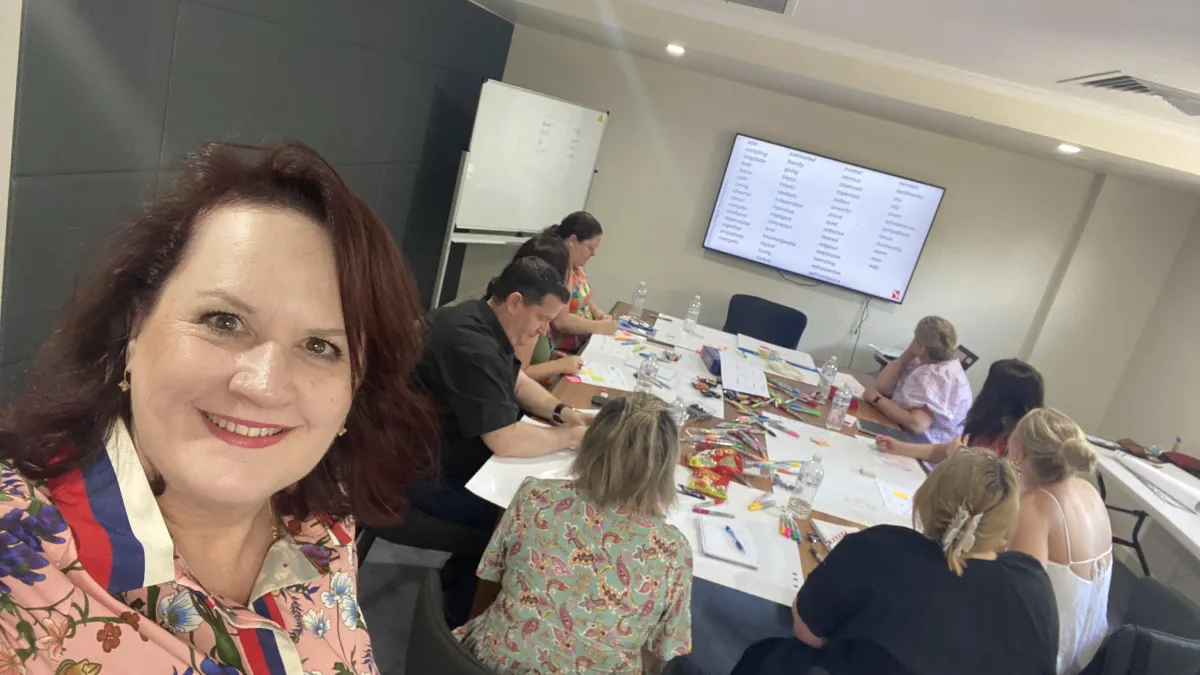
TAKE THE KEYNOTE EXPERIENCE TO THE NEXT LEVEL
The keynote is just the starting point, the real transformation happens when your leaders get the space to embed and apply the learning, insights and ideas.
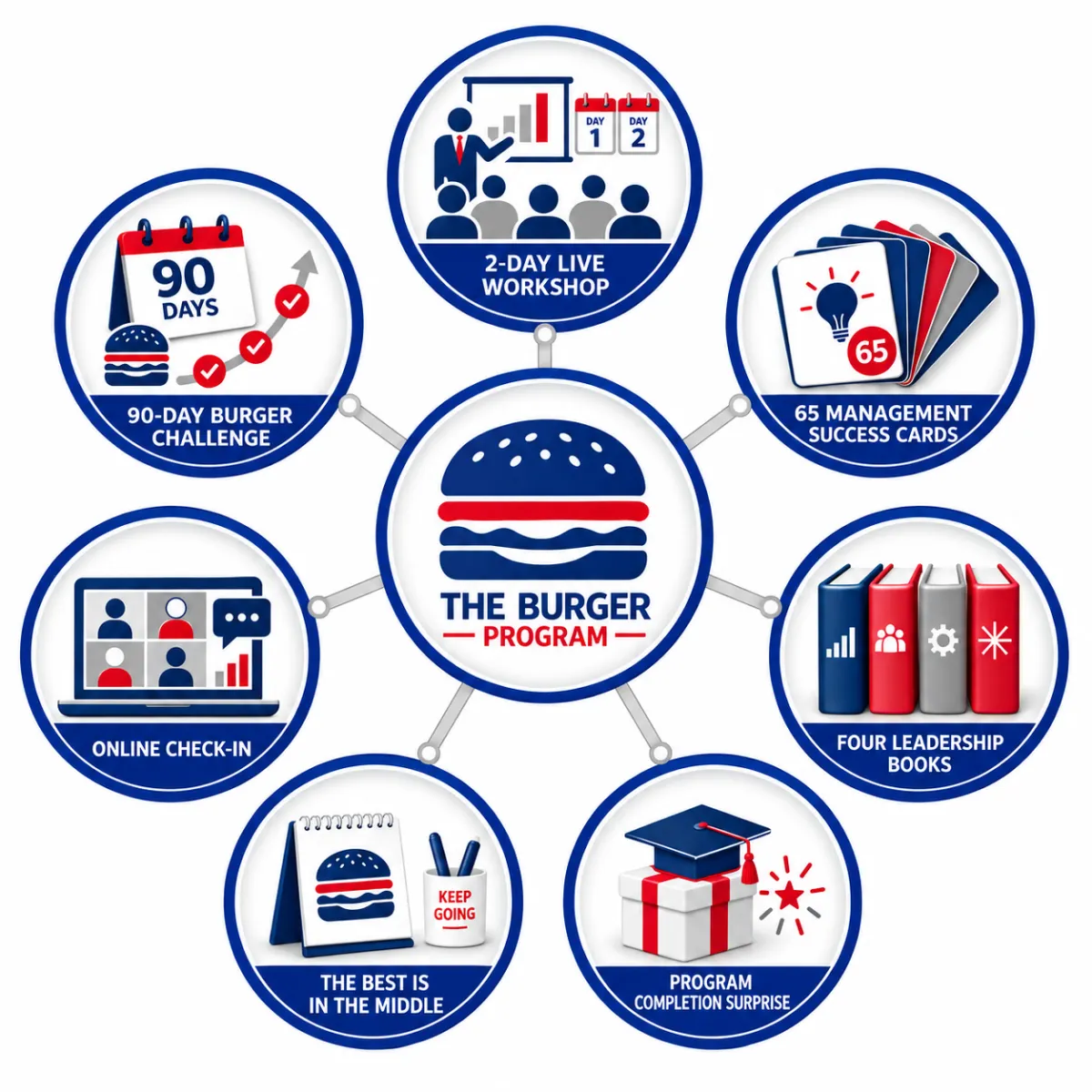
The 90 Day leadership transformation program takes the core concepts deeper into practical, day-to-day capability, with a proven ROI.
When you want to sustain the momentum and lift leadership across the organisation, I’m ready to partner with you and your organisation.
References and Further Reading
Gallup, “How to Improve Employee Engagement in the Workplace”
https://www.gallup.com/workplace/285674/improve-employee-engagement-workplace.aspx
Gallup, “Managers Account for 70% of Variance in Employee Engagement”
https://news.gallup.com/businessjournal/182792/managers-account-variance-employee-engagement.aspx
McKinsey & Company, “Investing in middle managers pays off, literally”
https://www.mckinsey.com/capabilities/people-and-organizational-performance/our-insights/investing-in-middle-managers-pays-off-literally
McKinsey & Company, “Stop wasting your most precious resource: Middle managers”
https://www.mckinsey.com/~/media/mckinsey/business%20functions/people-and-organizational-performance/our-insights/stop-wasting-your-most-precious-resource-middle-managers/stop-wasting-your-most-precious-resource-middle-managers-v2.pdf
Harvard Business Review, “A Middle Manager’s Guide to Executing Strategy”
https://hbr.org/podcast/2025/01/a-middle-managers-guide-to-executing-strategy
World Economic Forum, “Future of Jobs Report 2025”
https://www.weforum.org/publications/the-future-of-jobs-report-2025/
World Economic Forum, “Future of Jobs Report 2025: The jobs of the future and the skills you need to get them”
https://www.weforum.org/stories/2025/01/future-of-jobs-report-2025-jobs-of-the-future-and-the-skills-you-need-to-get-them/
middle managers, middle management, leadership, capability, capacity, conviction, confidence, confident leaders, training, facilitation, mentoring, keynote speaker, keynote speech, presentation, conference speaker, workshop program, communication, leadership communication, delegation, delegating, meetings, managing self, self-leadership, time management, problem solving and decision making, performance management, feedback, motivation, middle manager development, leadership development, professional development, certified speaking professional, award winning speaker, hall of fame educator, Sally Foley-Lewis, CSP, middle management expert, middle management speaker, middle manager leadership development, middle management training Australia, leadership development for middle managers, middle manager keynote speaker, developing middle managers, technical expert to people leader, middle manager training program, middle management training global
Copyright © 2025 Sally Foley-Lewis
Sally Foley-Lewis: Your Trusted Expert for Middle Manager Development
Copyright © 2025 Sally Foley-Lewis, All Rights Reserved.